Eminent faculty from across all four divisions of UChicago teach MLA courses in a Socratic seminar format. Students come to class having carefully read the assigned material and then engage in rich discussions, confronting fundamental questions and respectfully debating complex ideas. In this program, you’ll sharpen your critical, analytical, and writing skills as you examine topics from fresh perspectives that enrich your personal and professional life.
Classes meet once a week via Zoom with sessions scheduled on evenings or Saturdays to fit into a full-time work schedule. You also have the option to participate in our week-long, immersive residential seminars on the UChicago campus, which are offered twice a year in the Spring and Autumn Quarters.
You will not take many exams in this program. Instead, MLA faculty primarily evaluate students based on their participation in discussions and their performance on writing assignments. In both verbal and written communication, you’ll be expected to analyze complicated issues, make persuasive arguments, and synthesize information from multiple sources.
The Master of Liberal Arts brings the University of Chicago’s extraordinary intellectual assets together. You have the opportunity to engage deeply with professors from every division of our University in small, Socratic classrooms. Big ideas, eminent faculty, extraordinary peers—it’s a transformative combination.
Seth Green
Dean of the University of Chicago Graham School
Core Courses
Through four core courses, you’ll gain an interdisciplinary framework to break down complex topics into their basic components and answer challenging questions with methodological approaches from the humanities, social sciences, and natural sciences. Each class will require you to think critically, write thoughtfully, respond to your peers, and address problems.
To meet the core requirement, you’ll take one course in the Humanities, Social Sciences, Biological Sciences, and Physical Sciences:
Humanities
Grapple with foundational literary and philosophical texts, learning to interrogate subtle uses of language and ask important questions about the historic and cultural contexts in which texts were produced. Training in humanistic inquiry equips students to read closely and communicate original insights through writing and discussion. You’ll leave your humanities courses a more attentive reader, stronger writer, and better organized thinker.
Social Sciences
Pursue nuanced questions about human interaction and how societies form and function. The social sciences courses will equip you with modes of analysis to examine the effects of economic, political, and cultural phenomena on human behavior. Through rigorously scrutinizing the competing viewpoints from classic texts and thinkers, these classes deepen critical and analytical thinking. You’ll hone your analytic and communication skills by conveying thoughts in concise and persuasive prose
Biological and Physical Sciences
Deepen your knowledge of the processes involved in scientific thought and reasoning. Explore the potential for new discoveries to spur cultural change, shape public policy, and transform how humans perceive our place in our world and universe. You’ll become a more logical, evidence-based thinker by applying the tenets of the scientific method and discussing the principles of experimentation and observation.
Electives
To meet the elective requirement, you may either take three general electives in any discipline or choose a concentration and take all three courses in one area of study. The available concentrations are:
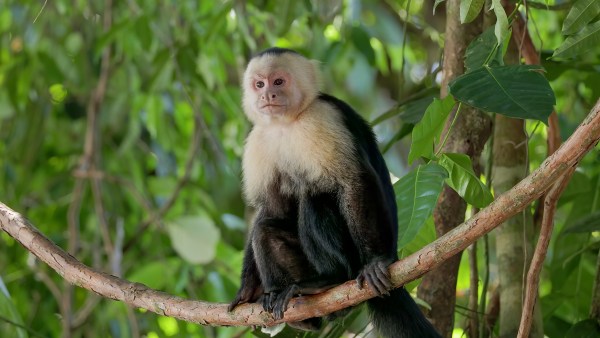
The course is designed to provide an introduction to the origin of the human species within the context of primate evolution. Evidence from anatomy, physiology, behavior, chromosomes and molecular biology will be reviewed in an accessible manner, with appropriate attention to key theoretical issues.
The history of life is intimately intertwined with continual changes in Earth systems over time. Evolution occurs against a backdrop of shifting continents, changing climates, and great mass extinctions that reset the playing field for the survivors. In this class we will explore the interplay between Earth and life using synapsids, ancient ancestors of mammals who lived between about 320 and 200 million years ago, as a case study.
This course will examine the question of leadership in American history, from the Founding to the present, focusing on expressions of justice and morality in the practice of self-governance and the setting of national policy.
How to cultivate excellence in human life and leadership, justice in human communities, and benevolent kindness in human relationships? These always timely questions were concerns shared by two ancient teachers of inherited wisdom in established philosophical schools: the Confucian Mengzi (Mencius), in third-century BCE China, and the Stoic Epictetus, in the second-century CE Greco-Roman Mediterranean.
This course will examine current understandings of online misinformation while relating them to broader current events. Topics may include: disguised advertisements; dark patterns of design; misinformation; disinformation; media literacy; content moderation; and censorship.
There may never have been a time when Taiwan’s future was so heatedly debated, or viewed as so central to global politics, as it is at this moment. This course will consider the unique three-century history of the island of Taiwan and its role as a geopolitical, cultural, and linguistic crossroads.
This course will focus on the nervous system, how the nervous system produces behavior, how we use our brain every day, and how neuroscience can explain the common problems afflicting people today.
We often think about Moby Dick as a description of American society as told through the microcosm of a whaleship. But Moby Dick is also a book about what knowledge is, what is knowable in the world, how humans relate to nature, and how scientific knowledge impacts society.
This course will focus on dark matter, dark energy, the destiny of the universe, the origin of (ordinary) matter, cosmic inflations, and the multiverse.
This course looks at some models of leadership – Platonic, Aristotelian, Roman imperial, medieval chivalric, Machiavellian, Nietzscheian – and at the ways in which these various ideals are represented and tested in works of literature, art, and film
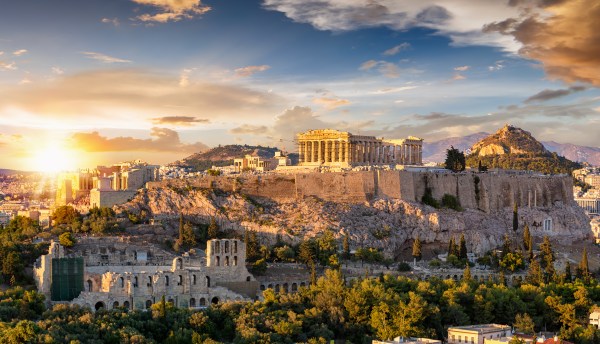
The period of High Classical Athens saw a people ruling itself in an utterly free state. In this week-long Residential Seminar, we will examine how historical texts, tragic dramas, and marble sculpture and building attest to the rule of the people, by the people, and for the people.
I have always had a passion for learning and a desire to challenge myself. The MLA program presented a way to enhance my skills—not only as an individual but also as a participant and leader in our society. The MLA attests to the fact that there is inherent value associated with studying the humanities and in developing a background and comfort with the diverse topics that comprise the liberal arts.
Andrew F. Shorr
Division Head, Pulmonary, Critical Care, & Respiratory Services, Medstar Washington Hospital Center; and Professor of Medicine, Georgetown University
A faculty advisor will support you in selecting a thesis or project that aligns with your interests. MLA students have the flexibility to choose projects that hold value and meaning for them personally or that can be applied to their careers.
Examples of past MLA thesis topics include:
A Comparative Analysis of the American & Chilean Revolutions
Economic Survival of Small Chicago Area Farmers During COVID-19: Leadership Skills that Enabled Success in the Pandemic
Using Poetry as Leadership Training: Fostering a More Diverse, Equitable and Inclusive College
The format of special projects is flexible. Past examples include a piece of visual art and a book of poetry.
Once your thesis topic or project is approved, you will be paired with a faculty advisor, who will remain heavily engaged throughout the process. The advisor serves as a vital resource by pointing you toward scholarship and other sources of information that can guide your work. You will remain in contact as your project evolves, receiving meaningful feedback on drafts.
In most cases, it takes two quarters for students to complete a thesis or special project.

 Seth GreenDean of the University of Chicago Graham School